
There is still a tendency to treat African art as something recent, still emerging, still finding its place on the global art scene. However, across the continent artists, museums, and cultural spaces have been shaping a distinct and influential art scene for many decades. The work is rooted in place, but rarely stays there, moving and continuing to shape conversations far beyond the continent itself.

Ben Enwonwu is one of the best early examples. A Nigerian artist working in the mid-20th century, his work challenged Western-dominated narratives, showing that modernity was not confined to Europe, but could also emerge from African perspectives and traditions.
As one of the first African artists to gain global recognition and prestige, Enwonwu blended classical art training with indigenous techniques, particularly drawing on Igbo artistic traditions. Through this approach, he helped position African artists within the global art discourse and influenced later generations to assert their cultural identity in contemporary ways.

Building on Ben Enwonwu and his legacy, a recent exhibition on Nigerian modernism at Tate Modern further explored the global significance of modern African artists – and how figures like Enwonwu helped shape a distinctly African modernism that continues to influence contemporary art today.
I wanted to share a perspective on how African art has evolved, and how it connects to the way the continent is experienced through travel.
THE AFRICAN ART SCENE TODAY
A new generation of artists is gaining recognition, moving between local scenes and international exposure. Cyrus Kabiru is someone that really stands out to me. I first came across his work at Zeitz MOCAA and later at Segera. His “C-Stunners” – sculptural glasses made from recycled materials – immediately feel playful, but the more I looked, the more I saw how precise they were. I feel they sit somewhere between design and commentary, exploring identity and urban life in a way that feels both local and global.

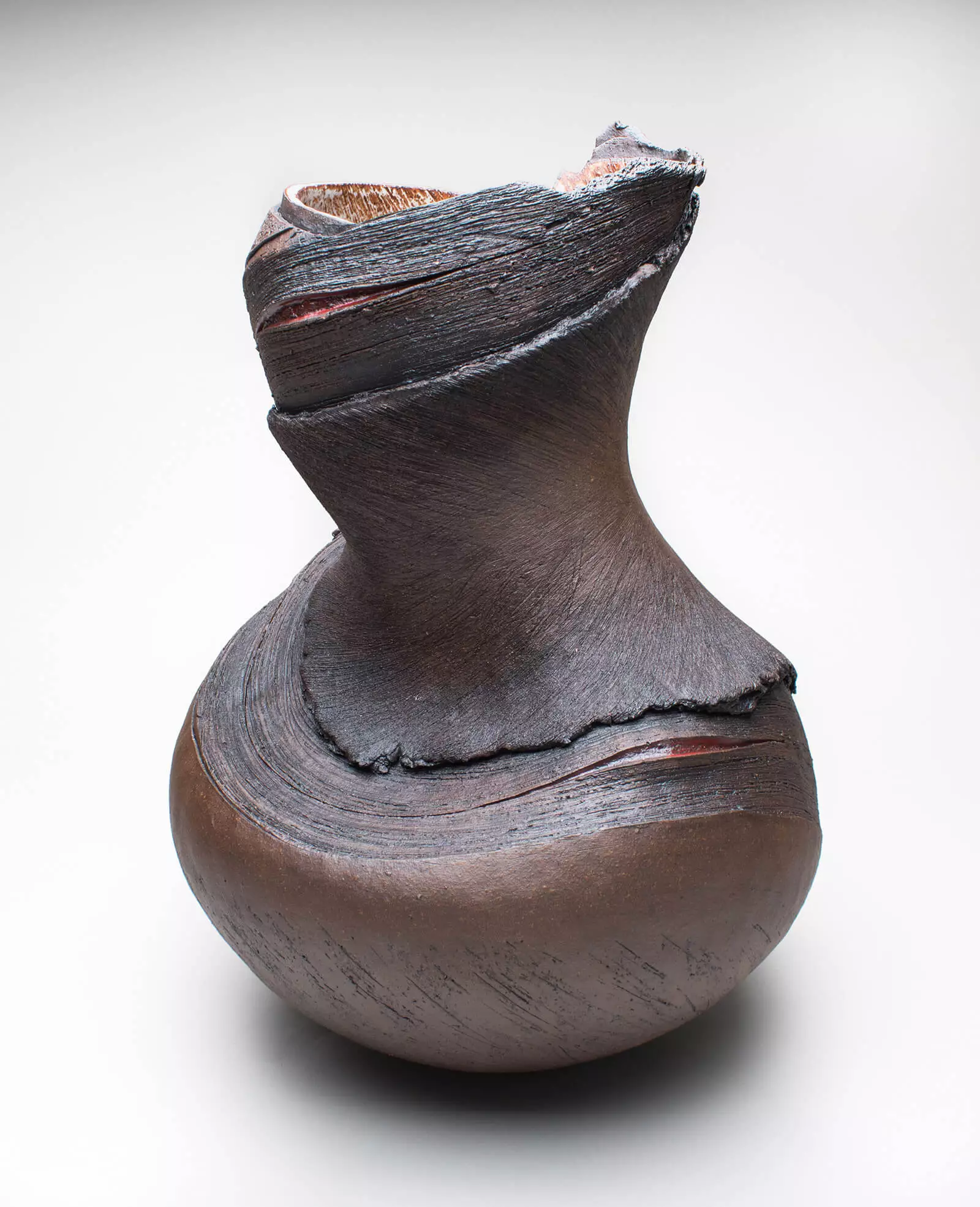
Alongside this, established figures continue to shape the scene. Amoako Boafo’s work resonates strongly – his finger-painted portraits have this raw presence, where the texture and gesture make them hard to ignore. Then there are artists like Andile Dyalvane, who bring a different perspective. His ceramics I read as both grounded and contemporary. I’m drawn to the sense of movement and rhythm in his pieces, and the way each one seems to hold its own energy.
All of this feels supported by a growing ecosystem across the continent. Galleries like Goodman Gallery have helped bring established artists like William Kentridge to wider audiences, while independent spaces and residencies across West and East Africa keep expanding what support can look like.

BEYOND AFRICA, INTO GLOBAL RECOGNITION
African artists are increasingly visible in major institutions like Tate Modern and MoMA, supported by a network of galleries and organizations across regions.
Within Africa, international spaces such as Goodman Gallery, Zeitz MOCAA, and Norval Foundation continue to shape the scene. Abroad, institutions including the National Museum of African Art, October Gallery, and Efie Gallery extend that reach.
Efie Gallery is notable for its clear focus on contemporary African art and the diaspora. Based in Dubai, it serves as a cultural bridge – connecting African artists with international audiences and placing their work within a wider global conversation, including platforms like Art Dubai.


Artists like El Anatsui further reinforce this global presence. From my perspective, his works, made from discarded materials, shift with light and movement, revealing a tension between fragility and strength that can best be appreciated in person.
Together, these practices reflect a broader shift: African art is no longer framed simply as ‘emerging’ – It now occupies a central place in the global conversation, both contemporary and historical. Travel also plays a role in that shift. Not just in how the work is seen globally, but in how it is experienced on the continent itself.
ART WITHIN THE SAFARI CONTEXT
Within the travel world, several safari properties place African art at the centre, shaping how a location is understood and experienced and extending the feel of Africa beyond its nature and wildlife.
At Xigera Safari Lodge in Botswana, collaboration with African artists and artisans defines the entire space. Functional objects are treated as artworks, from furniture to sculptural pieces, with a deliberate effort to place craftsmanship on the same level as fine art.

Cheetah Plains in South Africa takes a different approach, working in partnership with Goodman Gallery to bring works by leading contemporary artists into the space. In addition to a dedicated gallery space, pieces sit within the property and villas in a way that feels lived with rather than formally displayed.
Segera in Laikipia adds another layer. Art appears throughout the property, across gardens, and open landscape, forming part of the experience as you move through it.
The programme is ongoing, reflecting a long-term commitment to African artists while connecting the work to the surrounding environment and conservation efforts. Through its ties to the Zeitz collection, Segera also helps extend global recognition for these artists, offering a way to engage with their work outside a traditional gallery setting.
One piece that stayed with me on my last visit was by Kyle Morland. His sculptural forms sit within the openness of Laikipia in a way that feels deliberate but not imposed. The contrast between structure and landscape creates something more contemplative. To me, Morland’s installations reveal how minimal, precise forms can engage deeply with their context and surroundings.
Together, these spaces offer a way to experience art outside the usual formal setting. Travellers come across works in context, woven into everyday life rather than confined to a gallery. Seeing the work in Africa, in the places where it is created, changes how it is understood later; it carries a different weight.
In that sense, safari becomes a point of entry into the wider art scene.
African art isn’t confined to a single city or style – it has always moved between places, shaped by the people and spaces that sustain it.
For those travelling through the continent, it offers another way in; a cultural conversation that begins in one place, and continues long after you’ve left.
Image credits: Artsy, Ben Uri Gallery, Blank Project, Efie Gallery, Ignant, The Design Edit, The New Yorker, Xigera.